

Ancient Akrotiri is a prehistoric settlement on Santorini’s southwestern coast, near the modern village of Akrotiri. Its excavated streets and buildings reveal a Bronze Age town buried by volcanic deposits, making it a compelling archaeological stop to combine with the island’s southern coast.
- Location: Near the modern village of Akrotiri, on Santorini’s southwestern coast.
- From Perissa: About 6.2 km and 16 minutes by car from Villa Voula, which offers rooms in Perissa.
- Tickets: The standard ticket is €20 and the reduced ticket is €10; electronic tickets are available.
- Hours: Open daily
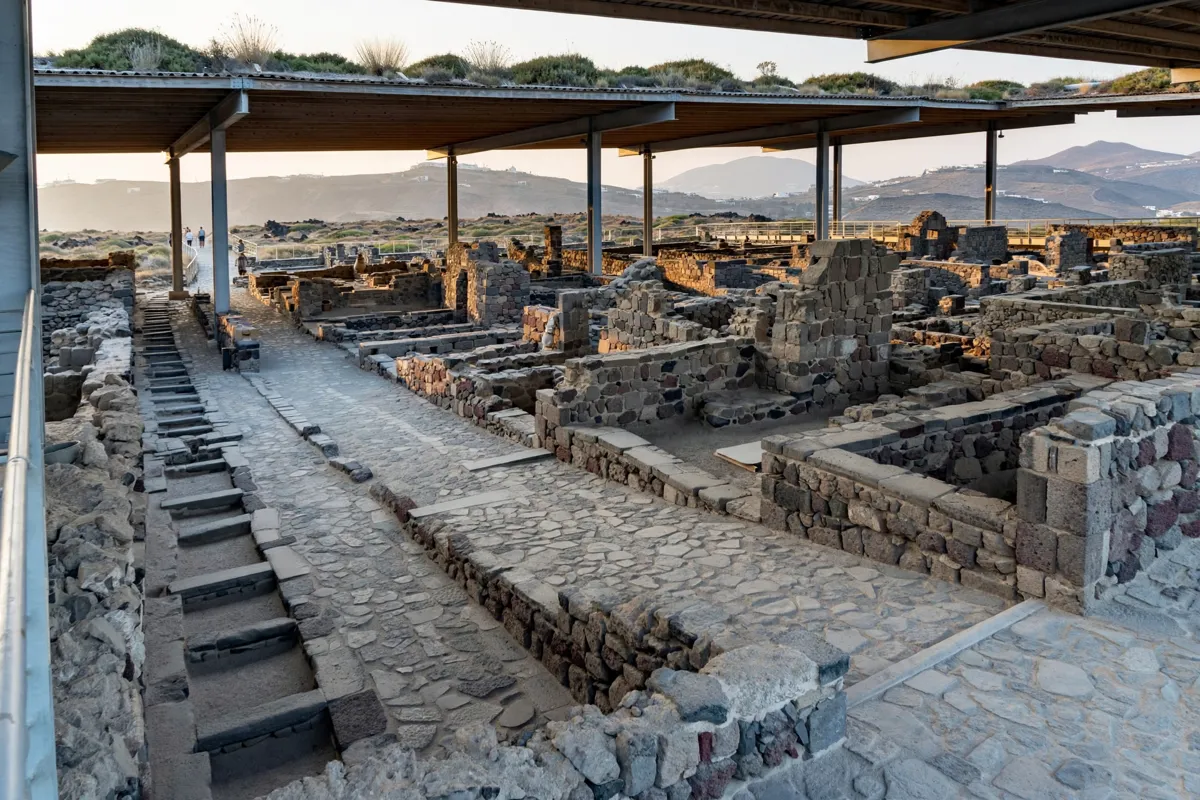
What Ancient Akrotiri Is
Ancient Akrotiri is the excavated remains of a prehistoric settlement whose history extends from about 4,500 BC to approximately the end of the 17th century BC. During the Late Bronze Age eruption, volcanic deposits buried the town; the official site describes the eruption as probably occurring toward the end of the 17th century BC.
Systematic excavations began in 1967 under Spyridon Marinatos and continue under Christos Doumas, under the auspices of the Archaeological Society at Athens. The area currently visible to visitors covers approximately 12 stremmas, or about 12,000 square metres.
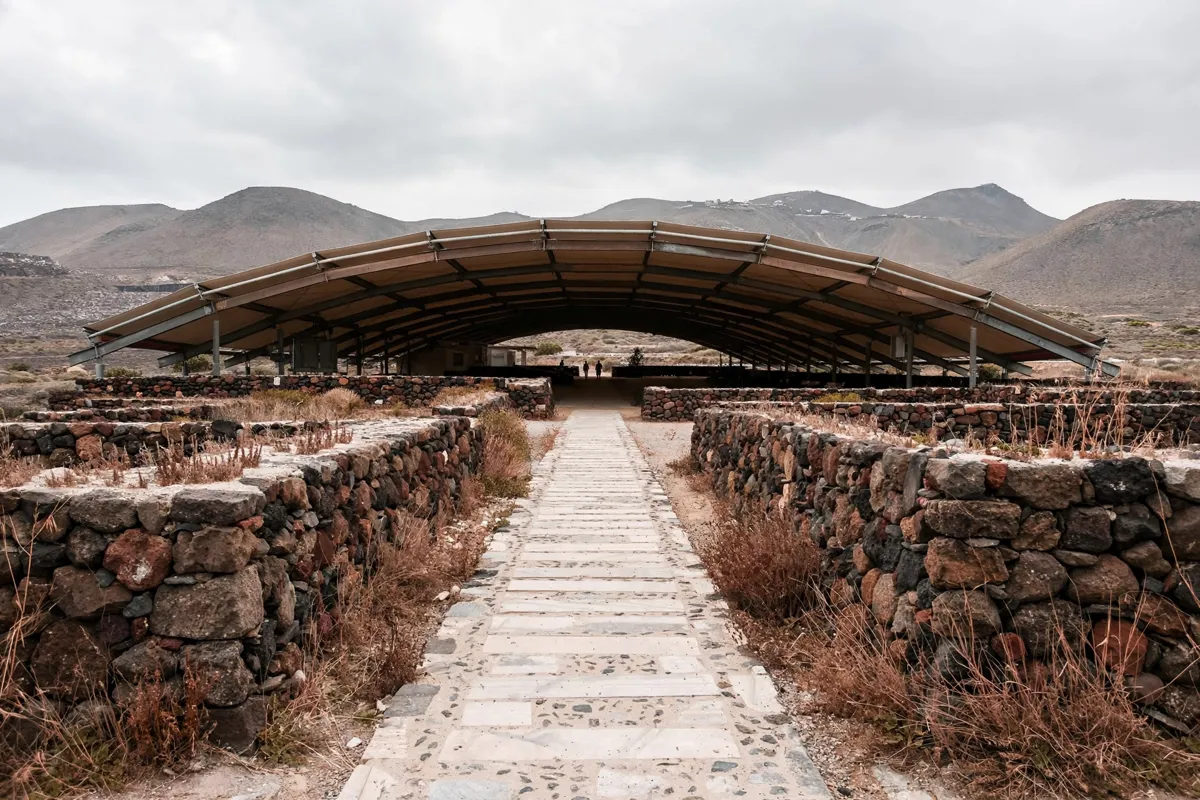
The excavation sits beneath a bioclimatic shelter designed by architect N. Findikakis. Visitors follow designated routes and viewing stops through the protected site, where the excavated urban area includes paved streets, a drainage network, squares and more than 30 multi-storey public and private buildings.
How do you get from Perissa to Ancient Akrotiri?
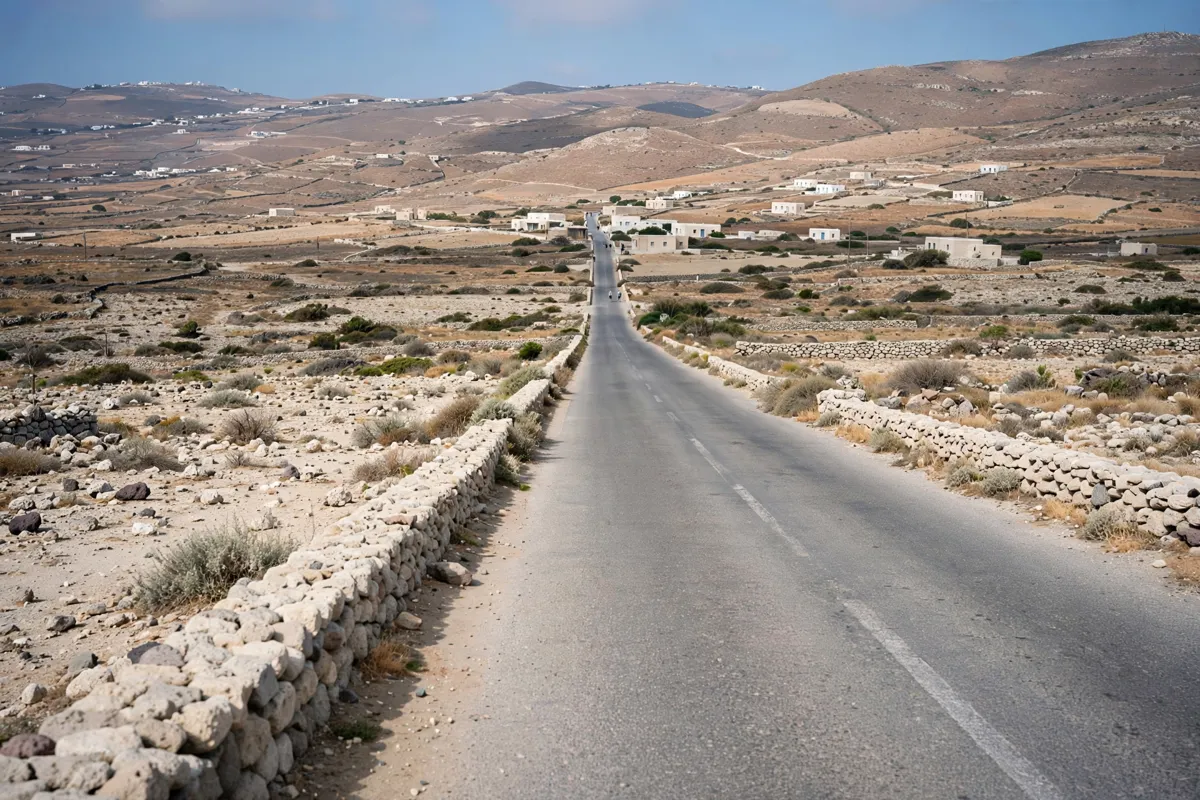
The archaeological-site page provides Google Maps directions and the site’s telephone numbers: +30 22860 81969 and +30 22860 81939. Public transport connections should be checked with Santorini KTEL before you travel.
There is no confirmed direct Perissa-to-Akrotiri bus connection in the available route details, so don’t assume that a single bus will take you all the way. If you plan to use buses, check the current KTEL timetable and connection options before setting out.
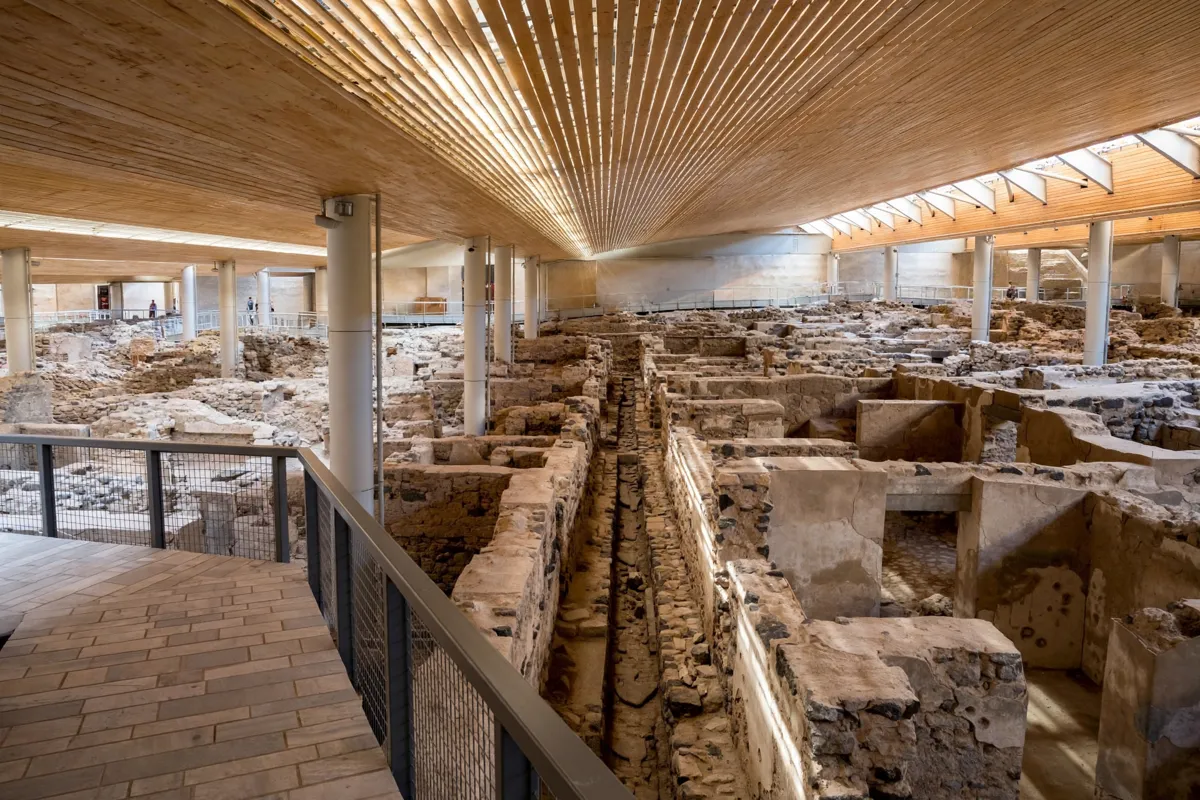
What to see at the excavation
Start by following the designated visitor route to take in the settlement’s layout: paved streets, squares, drainage infrastructure and multi-storey buildings show how extensively the town was developed. The shelter protects the excavated area while allowing visitors to view its remains from the route and viewing stops.
The official site describes preserved finds that include vessels, household objects, wall-painting fragments and plaster casts made from impressions left by perishable objects. Xeste 3 is a well-investigated public building associated with rites of passage.
Parts of its wall-painting decoration are displayed at the Museum of Prehistoric Thera, where you can see finds from Akrotiri in a museum setting. The Museum of Prehistoric Thera guide covers what to see there and how to visit.
Two well-known frescoes are now held elsewhere: the Spring Fresco, from a room in the East Building of Sector D, is in the National Archaeological Museum, while parts of the Xeste 3 wall-painting decoration are at the Museum of Prehistoric Thera. The excavation itself is the place to focus on the settlement’s streets, buildings and preserved features.
Opening hours, tickets and site rules
- Hours
- and-prices page also identifies 1 January, 25 March, Easter Sunday, 1 May, and 2
Ancient Akrotiri’s hours change according to the date, so check the official site before you go. Standard tickets cost €20, reduced tickets cost €10, electronic tickets are available, and last admission is 20 minutes before closing.
From 1 November through 31 March. The general hours-and-prices page also identifies 1 January, 25 March, Easter Sunday, 1 May, and 25–26 December as regular closure days.
Opening hours
- Monday and Thursday: 8:30–15:30
- Tuesday, Wednesday, Saturday and Sunday: 8:00–19:00
- Friday: 8:00–18:30
Last checked November 2026. Hours can change on holidays and for special events.
September hours differ between the first and second halves of the month. From 1–15 September, the site is open 08:30–15:30 on Monday and Thursday, and 08:00–19:30 on Tuesday, Wednesday, and Friday through Sunday; last admission is 15:10 or 19:10, respectively.
From 16–30 September, the same days have hours of 08:30–15:30 and 08:00–19:00, with last admission at 15:10 or 18:40, respectively.
Once inside, stick to the designated route and viewing stops beneath the shelter. This keeps your visit within the areas set out for viewing the excavation.
Pairing Akrotiri with nearby coastal stops
Akrotiri’s position on Santorini’s southwestern coast makes it straightforward to pair the archaeological site with time by the sea. Red Beach is another well-known stop in the area; its access and parking arrangements are covered in this Red Beach visit guide.
For a simple plan, visit the excavation first, then continue to a coastal stop nearby. Keep the site’s closing time and last admission in mind when choosing how to divide your day, especially when the seasonal schedule gives you a shorter visiting window.
FAQs
Where is Ancient Akrotiri?
It is on Santorini’s southwestern coast, near the modern village of Akrotiri.
How much are tickets to Ancient Akrotiri?
The standard ticket is €20 and a reduced ticket is €10. An electronic-ticket option is available.
Is Ancient Akrotiri open every day?
Open daily. No. The site also has several regular closure days. Hours and closures vary, so check the official site before your visit.
What can you see at the excavation?
The site includes paved streets, squares, drainage infrastructure and the remains of multi-storey buildings, along with preserved objects and fragments of wall paintings.